Fresh Paint

October 2026

← The latest briefs

Painting the cosmos

Artists who imagined space, and one who went

Before anyone had photographed another planet, artists had to imagine what space looked like. A new exhibition at the Wende Museum in Culver City, California, opening November 7, gathers 19 artists who painted the sky during and after the Space Race, including cosmonaut Alexei Leonov, the first person to walk in space. A full-size Sputnik model and a real meteorite sit beside the paintings.

In the studio

For little hands: Flick white paint off an old toothbrush onto black paper for stars, then paint the planet you would visit.

For grown-ups: Paint a Martian sunset in watercolor, then read why fine dust makes evening skies on Mars glow blue.

Read the full story at The Wende Museum wendemuseum.org · Image: Li Tianbing, The Great Escape, 2020, oil on canvas. Courtesy of the Wende Museum

In the library Deep Field · Planetary Families

Sun printing

A blue picture made by the sun

In 1842 the astronomer John Herschel found a way to copy his notes with sunlight and iron salts. This October, Ohio University students revived his trick. They brushed paper with a light-sensitive solution, laid objects on top and set it in the sun. Where light struck, the iron turned into Prussian blue. A rinse in water revealed white shapes on deep blue.

In the studio

For little hands: Lay leaves on dark construction paper in a sunny window for a few days, then lift them to find their pale shadows.

For grown-ups: Try a cyanotype kit: press ferns under glass, expose in sunlight about ten minutes, then rinse and watch the blue deepen.

Read the full story at Ohio University ohio.edu · Image: Ohio University

Art education

A museum makes more room to make art

The Philadelphia Museum of Art just received a $20 million gift to build a new home for learning inside the museum. The plan includes art studios, a family learning center and room for many more school groups. The museum already welcomes about 36,000 students a year, and kids 18 and under get in free. Soon, more of them can make art beside the paintings.

In the studio

For little hands: Cut felt or paper scraps into bold shapes and arrange them on yellow paper, the way the kids in the photo did.

For grown-ups: Bring a sketchbook to a museum, pick one painting, and copy only its shapes and its three main colors.

Read the full story at Philadelphia Museum of Art press.philamuseum.org · Image: Albert Yee, Philadelphia Museum of Art

Art + aging

A museum show made entirely by older artists

At the Phillips Collection in Washington, DC, every artwork in Creative Aging 2026 was made by older adults living with memory loss. Each session starts in the galleries, talking about a painting, then moves to the art table. After seeing Sam Gilliam’s draped canvases, one group folded, rolled and pinned paint-soaked canvas until it hardened into shape. The show runs through November 8.

In the studio

For little hands: Paint a scrap of old cotton, then fold and pin it while wet to see what shape it dries into.

For seniors: Look at one painting for five quiet minutes with a friend, then paint the feeling it left you.

Read the full story at The Phillips Collection phillipscollection.org · Image: The Phillips Collection

Seattle scene

A tiny forest takes over a Seattle parking garage

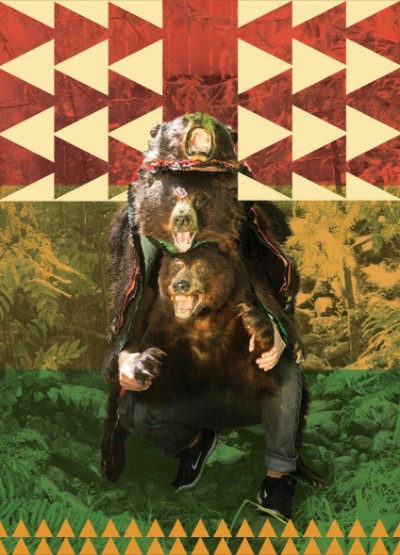
On Friday, October 30, Swinomish artist Daniel R. Smith turns the lower level of a University of Washington parking garage into a “nanoforest”: native plants growing out of industrial oil barrels. Visitors can make art, pose for costumed portraits, meet live birds of prey and share fry bread tacos. It’s free, and it travels to UW Bothell’s central plaza on November 5.

In the studio

For little hands: Plant a bean in a clean tin can, then paint the can with the creatures you hope will visit.

For grown-ups: Sketch one native plant from three sides, noticing how its leaves catch light, then paint it in watercolor.

Read the full story at Simpson Center for the Humanities, University of Washington simpsoncenter.org · Image: Simpson Center for the Humanities, University of Washington

Painting the sky

Two centuries of painting one seaside sky

A seaside museum in Trouville, France, has opened an exhibition of skies, hung by weather instead of by date: sunsets, rain, fine days and storms. Eugène Boudin painted hundreds of quick sky studies on this coast and wrote the date, the hour and the wind on many of them. The poet Baudelaire called them “meteorological beauties,” and the show borrows his phrase.

In the studio

For little hands: Look out the window, paint today’s sky in watercolor, and write the time and the wind beside it, like Boudin.

For grown-ups: Paint the same view at three hours of one day, and notice how the sky’s light changes every color below it.

Read the full story at Musée Villa Montebello, Trouville-sur-Mer trouville.fr · Image: Musée Villa Montebello; painting by Charles Mozin

Quilt traditions

Quilts that carried home across the country

In Washington, D.C., the National Museum of Women in the Arts is showing nearly 80 quilts made by Black women and families who moved from the rural South to California between 1940 and 1970. Many were pieced from old work clothes and sewn without a set pattern, so colors and shapes leap around joyfully. Some were made by grandmothers, daughters and granddaughters together.

In the studio

For little hands: Cut squares from old magazines and glue down a paper quilt, letting each square pick a different color.

For grown-ups: Try improvised piecing: cut strips from a worn shirt without measuring, and let the pattern grow as you sew.

Read the full story at National Museum of Women in the Arts nmwa.org · Image: Bequest of the Eli Leon Living Trust, BAMPFA; courtesy of Sherry Ann Byrd; photo by Kevin Candland

Color from light

Living orchids share a garden with color-shifting glass

At Marie Selby Botanical Gardens in Sarasota, this year’s Orchid Show pairs living orchids with artist Christian Sampson’s glass, acrylic and dichroic film. Dichroic film is stacked with layers thinner than a soap bubble: it lets some colors through and bounces others back, and the colors shift as you walk past. Several pieces take their cue from Selby’s orchid collection. On view through December 6.

In the studio

For little hands: Blow soap bubbles in sunshine, then paint the swirling colors you saw before they popped.

For grown-ups: Tape two colors of tissue paper on a sunny window and paint the third color where they overlap.

Read the full story at Marie Selby Botanical Gardens selby.org · Image: Marie Selby Botanical Gardens

In the library Transmitted Light · Feathers & Scales

Natural dyes

Reviving an ancient purple, one cloth at a time

In San Diego’s Balboa Park, the Japanese Friendship Garden is showing cloth by Japanese textile artist Fumiyo Imafuku, including new pieces dyed with plant-based materials. Since 2017 she has studied old purple-dyeing methods and brought them back to life. The show also includes katazome, where paste is pushed through a paper stencil so the dye cannot reach those parts. It closes Sunday, October 25.

In the studio

For little hands: Fold a paper towel, dip its corners in watered-down food coloring, and unfold it to find where the color traveled.

For grown-ups: Try a resist: paint a design in flour paste on cotton, let it dry, brush on dye, then wash the paste away.

Read the full story at Japanese Friendship Garden and Museum, San Diego niwa.org · Image: Japanese Friendship Garden and Museum, San Diego

Insect photography

A dung beetle wins a young photographer the top prize

Oscar Whitfield, a young photographer who grew up in Zimbabwe, won this year’s Young Wildlife Photographer of the Year title with a dung beetle. He lay flat in the hot dust to meet it at eye level as it rolled a ball far bigger than itself. Dung beetles bury that dung, which feeds the soil and cuts greenhouse gas.

In the studio

For little hands: Roll a ball of clay, then draw a beetle pushing it, legs braced, as if you were lying beside it.

For grown-ups: Sketch a small creature in black ink only, letting light and shadow, not color, carry the drama.

Read the full story at Natural History Museum, London nhm.ac.uk · Image: Oscar Whitfield, Wildlife Photographer of the Year

In the library Armored Wings

Paint detectives

Teaching a computer to peel back paint

When a painter reuses a canvas, an X-ray sees every layer at once, squashed into one blurry picture. Engineers at Northwestern University are teaching a computer to pull those layers apart, starting with Van Gogh, working with the Art Institute of Chicago and the Van Gogh Museum. Instead of one confident answer, it will show where the evidence is strong and where it is weak.

In the studio

For little hands: Paint a picture in crayon, paint a dark wash on top, then scratch gently to find the first one.

For grown-ups: Hold an old watercolor sketch to a sunny window and look for the pencil lines you painted over.

Read the full story at Northwestern University, McCormick School of Engineering mccormick.northwestern.edu · Image: Northwestern University

Northwest climate art

Artists and scientists map where water goes

At the Museum of Northwest Art in La Conner, artists have teamed up with scientists to picture how things move. Surge: A Geography of Flow, on view through January 10, follows water, plants, animals and people as storms grow and seas rise. Each artist worked with a scientist, turning maps and models into something you can see and feel.

In the studio

For little hands: Drip watery paint at the top of tilted paper and watch it find its own path downhill, like a river.

For grown-ups: Paint your neighborhood as seen from above, then trace in one blue line where rain runs after a storm.

Read the full story at Museum of Northwest Art monamuseum.org · Image: Phillip Govedare, Anthropocene (2018), via Museum of Northwest Art

Japanese woodblock

Hiroshige’s moon rises over a quiet harbor

A Michigan museum has opened Echoes of Nature, 200 years of Japanese prints of mountains, rivers and flowers. It runs from Edo-period masters like Utagawa Hiroshige to postwar etchings and screen prints. On its poster, Hiroshige’s full moon rises over a harbor as geese stream past and the blue bay fades into evening. Each color was printed from its own carved block.

In the studio

For little hands: Press a moon and some waves into a foam tray with a pencil, roll on ink, and print.

For grown-ups: Try a graded wash: paint blue watercolor, adding water each stroke so it fades like Hiroshige’s sea.

Read the full story at Saginaw Art Museum & Gardens saginawartmuseum.org · Image: Utagawa Hiroshige, Harbor Scene, Flint Institute of Arts; poster by Saginaw Art Museum & Gardens

In the library Borrowed Light

Painting outdoors

A chip engineer paints California from the trail

Sangeetha Gopalakrishnan spent 19 years designing computer chips, then picked up a brush after the pandemic and found she had a gift for color. Her new show at the California Nature Art Museum begins on hiking trails: quick sketches and color studies made outdoors, later built into big oil paintings. Each one blends many visits, not a single moment.

In the studio

For little hands: Sketch the same tree on three different days, then paint one picture using your favorite colors from each.

For grown-ups: Take a small paint box on a walk, make three-minute color notes, and build a larger painting at home.

Read the full story at California Nature Art Museum calnatureartmuseum.org · Image: Sangeetha Gopalakrishnan / California Nature Art Museum

Botanical art

A whole wildflower garden, painted one plant at a time

At the Bell Museum in Minneapolis, 111 watercolors make a portrait of one place: the Eloise Butler Wildflower Garden, the oldest public native plant garden in the country. Artists of the Minnesota School of Botanical Art painted its ferns, columbines and lady’s slippers one by one, building a florilegium: a collection of pictures of one place’s plants, kept as a record. On view through January 3.

In the studio

For little hands: Pick one leaf from your yard, trace its outline, then paint the veins you can see with a thin brush.

For grown-ups: Paint one plant from your street each month for a year, and you will have your own neighborhood florilegium.

Read the full story at Bell Museum, University of Minnesota bellmuseum.umn.edu · Image: Linda Powers, Eloise Butler Wildflower Garden and Bird Sanctuary Florilegium, Minneapolis Park and Recreation Board

Day of the Dead

Forty years of Day of the Dead art

Chicago’s National Museum of Mexican Art is holding its 40th yearly Day of the Dead show. Drawn from the museum’s own collection, it traces how the holiday grew from ancient Mesoamerican and Catholic roots, with each region of Mexico adding its own customs. In one etching, a resting figure wears printed bones. Visitors can add a note or drawing to a community altar.

In the studio

For little hands: Fold tissue paper, snip small shapes along the folds, then open it into a bright banner for a window.

For grown-ups: Try a foam print: press a drawing into craft foam with a dull pencil, roll on ink, and print.

Read the full story at National Museum of Mexican Art nationalmuseumofmexicanart.org · Image: Alfredo Zalce, Descanso (Resting), 1979, NMMA Permanent Collection

Paint as material

Leftover house paint, peeled and shaped into sculpture

Most paint has one job: cover a wall. Artist Sammie Jane Hardewig gives it another. She collects leftover house paint with unknown histories, lets it dry into rubbery skins, and stretches those skins over hand-built frames. The results droop and curl like seed pods or ripe fruit in soft lilac and peach. Her show, Protruding Pigments, is on view at the University of Central Missouri.

In the studio

For little hands: Brush glue mixed with paint onto a plastic lid, let it dry overnight, then peel off your colorful skin.

For grown-ups: Pour leftover acrylic onto a plastic sheet, peel it once dry, and drape the skin over bent wire to sculpt.

Read the full story at University of Central Missouri ucmo.edu · Image: University of Central Missouri

Art meets astronomy

An artist moves into the house where Uranus was found

In Bath, England, the house where William Herschel found the planet Uranus has new art in its rooms. Irish artist Grace Weir embroidered a tablecloth from William’s first map of the Milky Way, painted prisms, and made cyanotypes of the house’s shadows. In the old workshop, a live counter shows how far away Uranus is right now. The show runs until January 3.

In the studio

For little hands: Make a star map: poke holes in black paper where your stars go, then hold it up to a sunny window.

For grown-ups: Try a cyanotype: lay leaves on sun-sensitive paper in sunlight, rinse in water, and their shadows stay white on deep blue.

Read the full story at Bath Preservation Trust bath-preservation-trust.org.uk · Image: Grace Weir, Dust Defying Gravity, courtesy Bath Preservation Trust

In the library Light Pollution · Planetary Families

Bird illustration

The “British Audubon” gets his first museum show

In 1819, a young naturalist named Prideaux John Selby set out to draw every bird in Britain at life size. Over 15 years he made hundreds of hand-colored etchings of feathers, habits and life stages. Charles Darwin was among the naturalists he influenced. The Santa Barbara Museum of Natural History now gives this “British Audubon” his first museum show, through January 4.

In the studio

For little hands: Trace around a real feather, paint it in light gray watercolor, then add darker stripes with a fine brush.

For grown-ups: Draw one bird at true size from a field guide’s measurements, then add color in thin washes, the way hand-colorists did.

Read the full story at Santa Barbara Museum of Natural History sbnature.org · Image: Prideaux John Selby, via Santa Barbara Museum of Natural History

In the library Feathers & Scales

Seattle scene

Frankenthaler’s soak-stain spirit, pressed into prints

Helen Frankenthaler became famous for pouring thinned paint onto raw canvas so it soaked in like watercolor. Printmaking looked like the opposite: slow, chemical, repeated. She tried it anyway and made more than 300 print editions in etching, lithography, silkscreen and woodcut. The Henry Art Gallery in Seattle is showing a gift of her prints for the first time, through April 2027.

In the studio

For little hands: Drip watery paint on a paper towel, watch it spread, then press clean paper on top for a print.

For grown-ups: Brush a loose watercolor wash onto foil, lay damp paper over it, and pull a one-of-a-kind monoprint.

Read the full story at Henry Art Gallery henryart.org · Image: Helen Frankenthaler, Ramblas, 1987-88, lithograph, drypoint and etching. © Helen Frankenthaler Foundation / ARS, New York / Ediciones Polígrafa. Courtesy Henry Art Gallery

In the library Neurographic Sunsets

Indigo dyeing

Indigo’s trick: cloth that turns blue in air

In Iowa, the Cedar Rapids Museum of Art is celebrating fiber artist Astrid Hilger Bennett, who paints and prints straight onto cloth. In her Petunias in Indigo, big blossoms glow with deep blue centers. Indigo has a magic trick: cloth lifted from the dye bath looks yellow-green, then turns blue as air touches it and oxygen locks the color in. The show runs through January 3.

In the studio

For little hands: Fold a paper towel small, dip its corners in blue watercolor, then unfold it to find a snowflake of color.

For grown-ups: Wrap a cotton napkin with rubber bands before an indigo dip, then watch the blue arrive as it meets the air.

Read the full story at Cedar Rapids Museum of Art crma.org · Image: Astrid Hilger Bennett, Cedar Rapids Museum of Art

Insect art

Six rare insects, painted so people care

At the University of Maryland, artists are being asked to look at six rare Maryland insects, among them a tiger beetle, a hairstreak butterfly and a skimmer dragonfly, and make them unforgettable. The show opens October 14 in College Park. Judges care less about perfect accuracy than about whether a piece makes visitors care, and visitors are surveyed to see if art changed their minds.

In the studio

For little hands: Find a beetle outside, count its six legs, then paint it big with shiny oil pastel wings over watercolor.

For grown-ups: Pick one local insect, sketch it from a photo with a magnifier, and write three facts you learned in the margins.

Read the full story at University of Maryland Extension extension.umd.edu · Image: University of Maryland Extension

In the library Armored Wings · Insect Morse Code

Watercolor studies

Andrew Wyeth’s watercolors, most never shown before

The Cleveland Museum of Art has opened the first big show devoted to Andrew Wyeth’s watercolors: nearly 75 works from his estate, most never shown before. Painting the farms of Pennsylvania and the coast of Maine, he swung from loose, splashy landscapes to carefully drawn rooms, and many sheets were quick studies for slower paintings. A critic called them a spectacular freedom.
In the studio

For little hands: Paint a wet, splashy sky in two minutes, then add one slow, careful detail, like a boat or a bird.

For grown-ups: Paint the same view twice, once fast and loose and once slow and exact, then decide which feels more alive.

Read the full story at Cleveland Museum of Art clevelandart.org · Image: Andrew Wyeth, Maine Fisherman, 1936, via the Cleveland Museum of Art

Ocean science

Eleven artists team up with ocean scientists

At the University of Rhode Island, eleven artists each teamed up with an ocean scientist, and their work fills a free gallery by the sea until November 18. One painting, AMOC, turns the Atlantic’s great conveyor belt of warm and cold water into a red ribbon sweeping past an iceberg. Others take on swirling eddies, leopard seals and air from long ago.

In the studio

For little hands: Drip warm colored water into a jar of cold water, watch it swirl, then paint the swirls you saw.

For grown-ups: Paint a sea in cool blues, then sweep one warm red stroke across it to show where the heat travels.

Read the full story at URI Graduate School of Oceanography web.uri.edu · Image: AMOC by Ewa Romaszewicz with scientist Ambarish Karmalkar, via the University of Rhode Island

Art meets natural history

Four hundred years of painters among the specimens

Paris’s natural history museum turns 400 this year, and it is celebrating with its own art. Artists at the Museum, open until March 7, gathers more than 300 works: paintings, sculpture, photographs and film. For centuries, painters like Delacroix sketched the museum’s animals and plants, and some worked beside scientists, even inventing a way of painting specimens on vellum.

In the studio

For little hands: Pick one leaf or shell, look at it while you count to sixty, then paint exactly what you saw.

For grown-ups: Try a naturalist’s study: draw a feather or flower in pencil, add its measurements and date, then wash in watercolor.

Art + aging

Older artists in Miami will make paper by hand

Starting October 12, the Pérez Art Museum Miami opens a free five-week workshop for adults 55 and older. Teaching artists Shawna Moulton and Tom Virgin will show how to turn recycled scraps into pulp, pull fresh sheets of paper on a screen, and bind that paper into two or three handmade books. The finished books go on show November 12.

In the studio

For little hands: With a grown-up, blend torn scrap paper and water, spread the pulp on a window screen, press flat, and dry.

For seniors: Fold three sheets in half, nest them, and sew through the fold with five stitches to make a pamphlet book.

Read the full story at Pérez Art Museum Miami pamm.org · Image: Isabella Marie Garcia, Pérez Art Museum Miami

Northwest drawing

A Tacoma gallery becomes a drawing studio

On October 10, Tacoma Art Museum opens Drawing Room, a show that turns a gallery into a working drawing studio. More than forty drawings from the museum’s collection, from the late 1800s to 2017, share the room with space to make your own. Look for work by Morris Graves, Akio Takamori and cartoonist Lynda Barry. Here you don’t just look at drawing; you do it.

In the studio

For little hands: Draw the same leaf three ways: one slow line, one fast scribble, and once with your eyes closed.

For grown-ups: Try blind contour drawing: watch only your hand, never the paper, and let the wobbly line stay honest.

Read the full story at Tacoma Art Museum tacomaartmuseum.org · Image: Tacoma Art Museum

Art education

A free course for taking kids to museums

The Los Angeles County Museum of Art has made a free online course for kindergarten-through-sixth-grade teachers, built with its partner school. It covers getting children ready for a museum visit, helping them talk about what they see, and then hanging a show of their own work back at school. Students at Charles White Elementary did exactly that, with a show called Noticing Nature.

In the studio

For little hands: After any walk or museum visit, tape three drawings at your child’s eye level and let them give the show a title.

For grown-ups: Pick one painting, look for two full minutes, then list every color you noticed before reading the label.

Read the full story at LACMA Unframed unframed.lacma.org · Image: Katy Unger, Museum Associates/LACMA

Collage & assemblage

Twenty-four artists build pictures from scraps and objects

At the University of Delaware’s Mechanical Hall, a new free exhibition called Assembled shows what happens when artists build pictures instead of only painting them. Twenty-four artists, including David Driskell and Sam Gilliam, combine paint with cut paper, printed images and found objects. Collage glues flat scraps together; assemblage builds with real things in three dimensions. It is on view through December 8.

In the studio

For little hands: Tear colored paper and old magazine pages into shapes, then glue them down to invent an animal nobody has seen.

For seniors: Gather buttons, ticket stubs and old photographs, and arrange them in a shallow box before gluing anything down.

Read the full story at University of Delaware, UDaily udel.edu · Image: Michael Gates, University of Delaware

Drawing the science

Art students turn lab research into picture stories

At Tufts University, two art students spent the summer inside science labs, turning research into picture stories. One drew tuberculosis bacteria as robbers in a museum heist, tripping alarms of colored light, just as glowing dyes reveal cells under a microscope. Another drew a stem cell on a unicycle, balancing on a spinal-cord tightrope. The drawings may become journal covers.

In the studio

For little hands: Pick a tiny helper in your body, like a blood cell, and draw it as a character with a face and a job.

For grown-ups: Choose an idea you find hard to explain, then sketch it as a three-panel cartoon a child could follow.

Read the full story at Tufts Now now.tufts.edu · Image: Illustrations courtesy of Jimmy Yu and Vivian Gao / Tufts University

Botanical art

Botanical artists paint nature’s oddest partnerships

Botanical artists often paint one perfect flower. A new show at Denver Botanic Gardens paints the partnerships instead: mushrooms threaded through forest litter, lichens (a fungus and an alga living as one) wrapped around oak, and a pitcher plant that catches its own dinner. Forty-eight artists from around the world drew them in watercolor and colored pencil, close enough to count the gills.

In the studio

For little hands: Find lichen on a tree trunk, study it with a magnifying glass, then paint it ten times bigger in watercolor.

For grown-ups: Pick two living things that need each other, like a bee and a flower, and draw them together in colored pencil.

Read the full story at Denver Botanic Gardens botanicgardens.org · Image: Karen Kluglein, Magic (2023), via Denver Botanic Gardens